23 answers
Everything people ring up to ask
Grouped by the thing you are actually worried about. If yours is not here, ring the office and we will add it.
01 · 5 answers
Pricing and estimates
How the hourly rate, the minimum and the access fees actually work.
Local moves under 100 miles are hourly, governed by the CPUC Maximum Rate Tariff. You pay for crew hours plus any access fees. There is no weight involved, which is why the cube sheet matters for crew sizing rather than for the price per pound.
Two hours, then billing in 15-minute increments. We do not round up to the next hour and we do not add a flat travel fee on top of the clock for addresses inside the 40-minute band.
Only three things: more items than were on the cube sheet, access we could not see at survey, or a request to add packing or junk removal on the spot. The lead calls you before any of them go on the bill.
A sample $150 deposit holds the date and comes off the final bill. It is refundable up to 72 hours before the move. Beyond that it covers the crew slot we turned other work away for.
The cube sheet estimator is genuinely useful for truck size and crew count and is usually within about 10 percent on volume. It is not a quote. Nothing becomes a price until a coordinator has seen the stairs.
02 · 5 answers
Valuation, liability and claims
What we owe you if something breaks, and the real numbers behind it.
The no-cost option required to be offered on every interstate move. Liability is 60 cents per pound per article. A 40 lb television settles at $24 regardless of what it cost. It is not insurance and it is not adequate for most households.
The default option if you do not choose otherwise in writing. Your shipment must be declared at a minimum of $6.00 per pound of total weight. We then repair, replace with a like item, or pay current market replacement value. Deductibles of $0, $250 and $500 change the premium.
Anything worth more than $100 per pound: jewellery, coin and stamp collections, fine art, antiques, furs. These must be listed individually on a high-value inventory form before loading, or they sit outside the cover entirely.
Nine months from delivery under federal rules. Note damage on the bill of lading at delivery while the crew is still present, photograph it before anything is discarded, and we acknowledge within 30 days and resolve within 120.
Sometimes, at a reduced goods-in-transit sub-limit. Ring your agent and ask for that specific number in writing before you decline Full Value Protection. It usually sits on top of carrier liability rather than replacing it.
03 · 4 answers
What we can and cannot carry
The hazardous-materials rules are federal. They are not negotiable at the kerb.
Compressed flammable gas cannot travel in a household goods trailer. That includes the grill tank, camping canisters and scuba tanks. Empty the grill and leave the tank with a neighbour or a propane exchange.
Inside San Diego County, yes, at your risk and in your own car if possible. Across a state line, no. The California Department of Food and Agriculture restricts plant movement at border inspection stations and a trailer in summer kills most of them anyway.
Unloaded long guns in a locked case can travel on a household shipment. Ammunition cannot, ever. Handguns we ask you to transport yourself. Bring the safe combination to nobody, including us.
Sealed, shelf-stable pantry goods on a local move, yes. Refrigerated, frozen or open food, no. On any long-distance move we ask you to empty the pantry completely, because weight costs money and a leaking jar ruins a carton stack.
04 · 4 answers
Stairs, lifts and parking
Access is the single biggest reason a move runs over its estimate.
One full storey from the truck to your door. A porch with six steps is not a flight. A two-storey walk-up in North Park is one flight above the first and carries one stair fee at that address.
More than 75 feet measured along the walking path from the tailgate to your door. It is charged in 50 ft increments beyond that. Reserving two kerbside spaces usually removes it.
When a 26 ft truck physically cannot reach the address: low garage clearance, hillside lanes above La Jolla Shores, some gated cul-de-sacs. We identify it at the survey and put it on the estimate, never on the day.
Yes, and do it as soon as you have a date. Most downtown and La Jolla buildings release a four-hour freight window and require a certificate of insurance naming the association. Send us the wording and allow three business days.
05 · 5 answers
Booking, timing and storage
When to book, what happens if dates slip, and how storage in transit works.
Three weeks off-season. Six to eight weeks for June through September, and longer if you are moving on the last weekend of the month, which is the busiest weekend in the industry because leases turn over.
Tell us as soon as you know. We reschedule without a fee if you give us 72 hours. If the gap is short we load into vaults and hold your goods as storage in transit rather than making you find a unit.
Self storage is a room you rent and load yourself. Storage in transit keeps your goods sealed in timber vaults on our inventory and our liability, and it comes out on your inventory numbers. You never handle it twice.
Yes, at the same rate. Saturday is our busiest day and Sunday mornings are usually the easiest slot in the week to get a large crew.
They do and they appreciate it, but nobody will ask and nothing is added to your bill. Somewhere between $20 and $50 per mover on a full-day local move is a common San Diego range if you want a number.
Still stuck?
Ring the office, someone picks up
Coordinators are on the phone from 7:00 am to 7:00 pm on weekdays. There is no call queue, no menu and no chatbot.
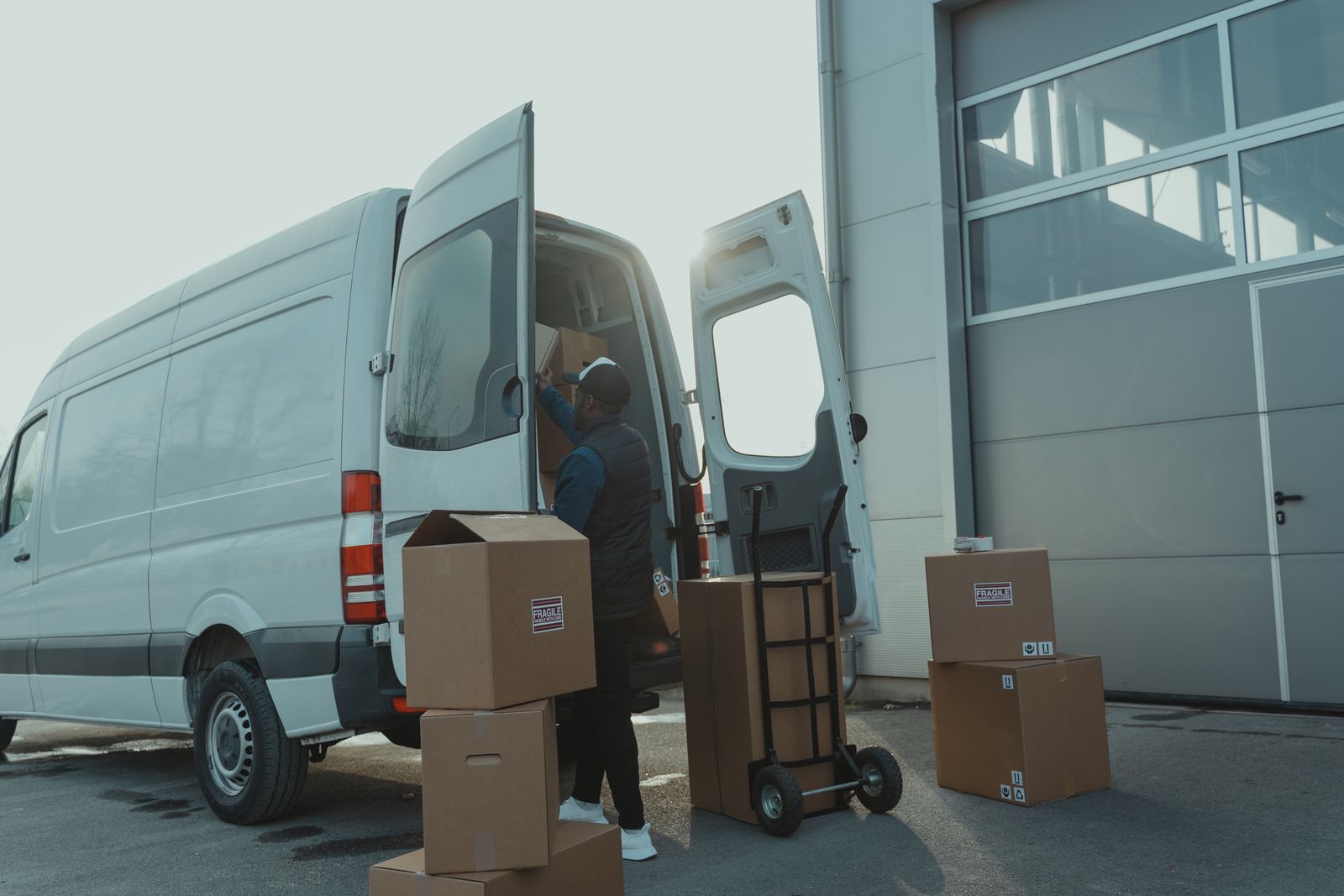
Same-day moves
Lease fell through on a Tuesday?
We hold two crews back every weekday for same-day and next-day work. Call before 11:00 am and there is a good chance we can be at your door by two.
Same-day slots are first come, first served and depend on the board.